From signals to rainfall: Wireless Rain Gauge reaches final milestone

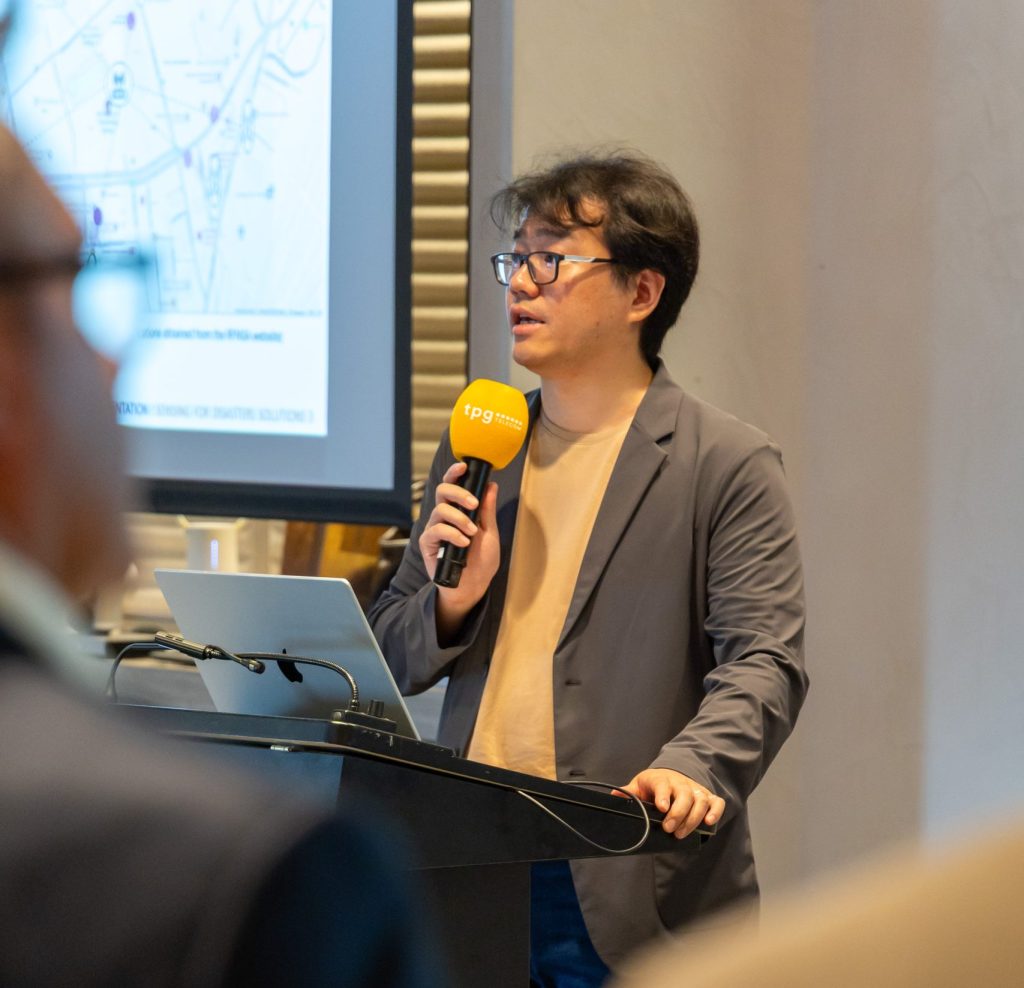
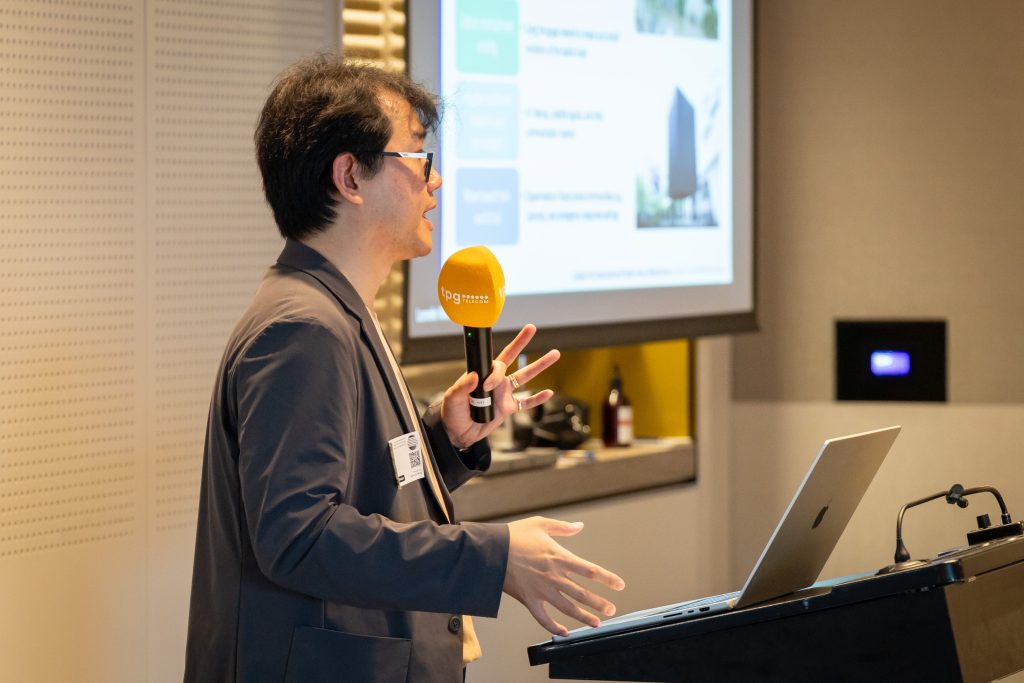
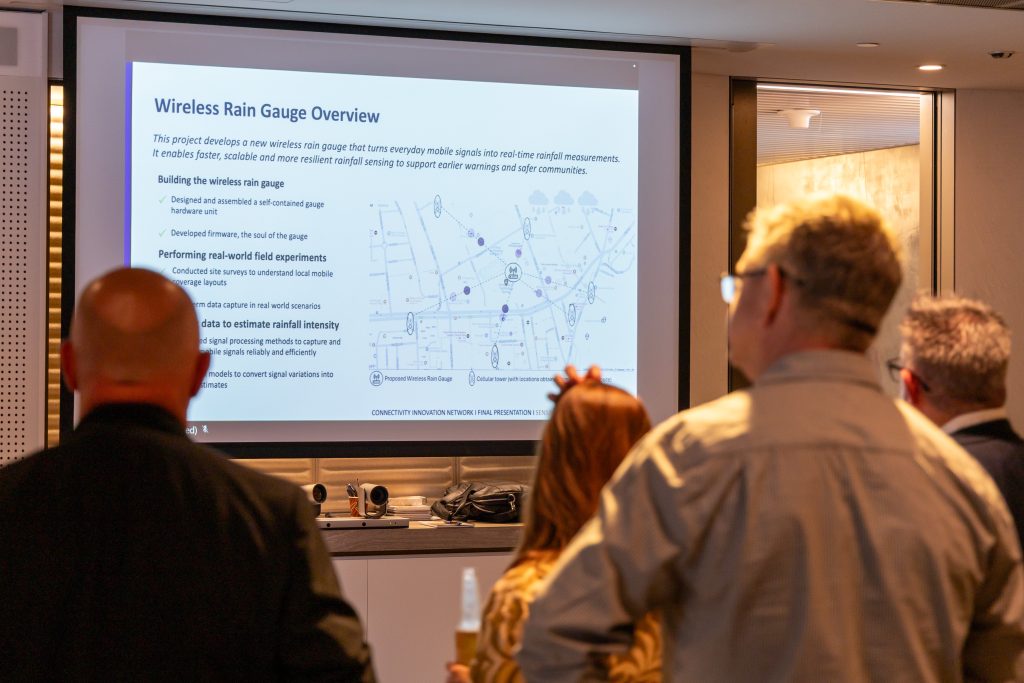
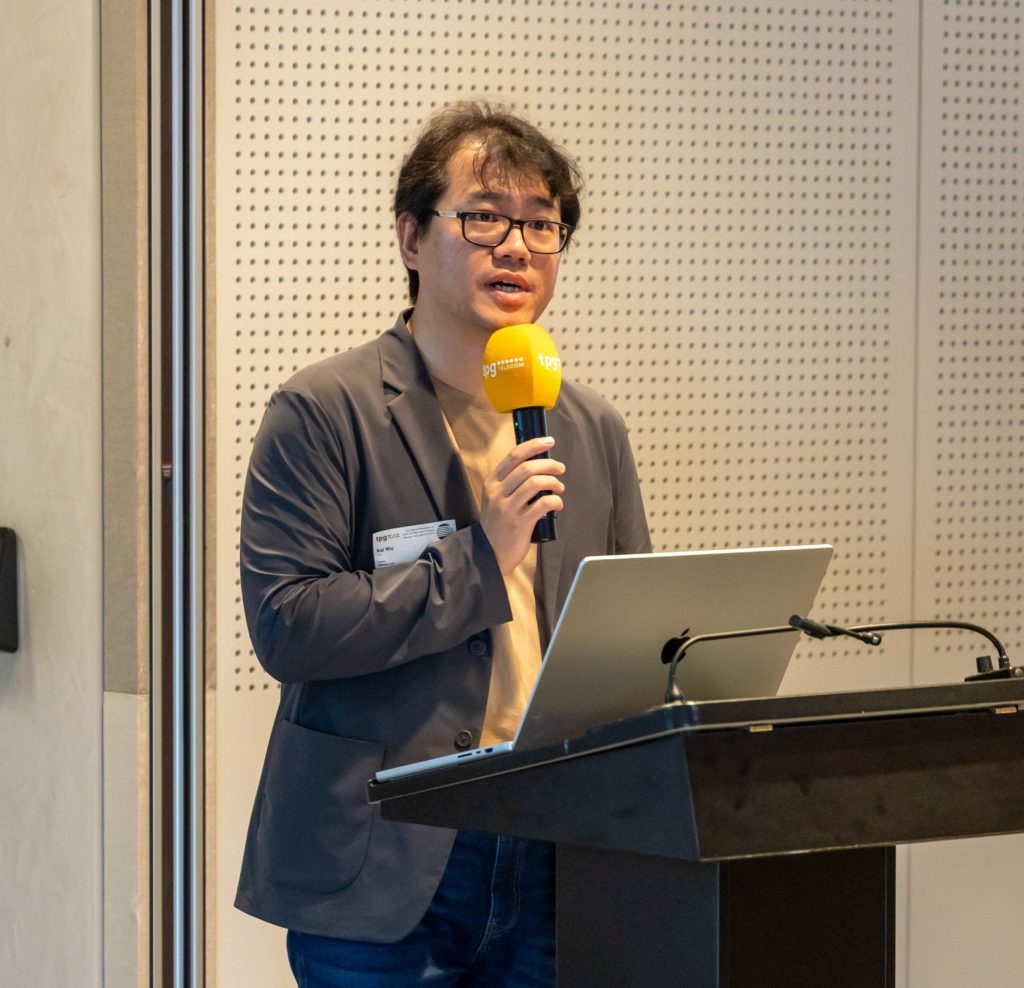
At CIN’s end-of-year event, Dr Kai Wu presented the outcomes of Project 3 within the Sensing for Disasters Solutions program: a wireless rain gauge that transforms everyday mobile signals into near real-time rainfall measurements.

The presentation marked the conclusion of the project’s research and development phase, with a fully standalone physical sensor demonstrated alongside field results collected across diverse real-world environments. Led by Dr Wu from the University of Technology Sydney, the project moves rainfall sensing beyond traditional gauges, offering a more resilient approach for locations exposed to extreme weather.

From CIN’s Regional Connectivity Symposium to a physical prototype

The Sensing for Disasters Solutions initiative, delivered by the Connectivity Innovation Network (CIN) in collaboration with the NSW Smart Sensing Network (NSSN), emerged from discussions at the inaugural Regional Connectivity Symposium, co-hosted with Southern Cross University in Lismore in September 2023.

Following a call for proposals, CIN awarded three sensing projects. Two focused on novel fundamental research challenges, while Project 3 was established as a Research and Development project tasked with delivering a physical prototype. Together, the projects explore how advances in robotics, artificial intelligence and the Internet of Things can strengthen disaster preparedness and response, particularly in regions prone to extreme weather.

Project 3 addressed a practical challenge raised during early program discussions: how rainfall can measure rainfall reliably in environments where traditional gauges are sparse, vulnerable, or difficult to maintain.

Rather than relying on mechanical instruments, the wireless rain gauge estimates rainfall intensity by analysing how rain affects mobile communication signals. Variations in signal strength across multiple frequency bands are processed to infer rainfall in near real time.

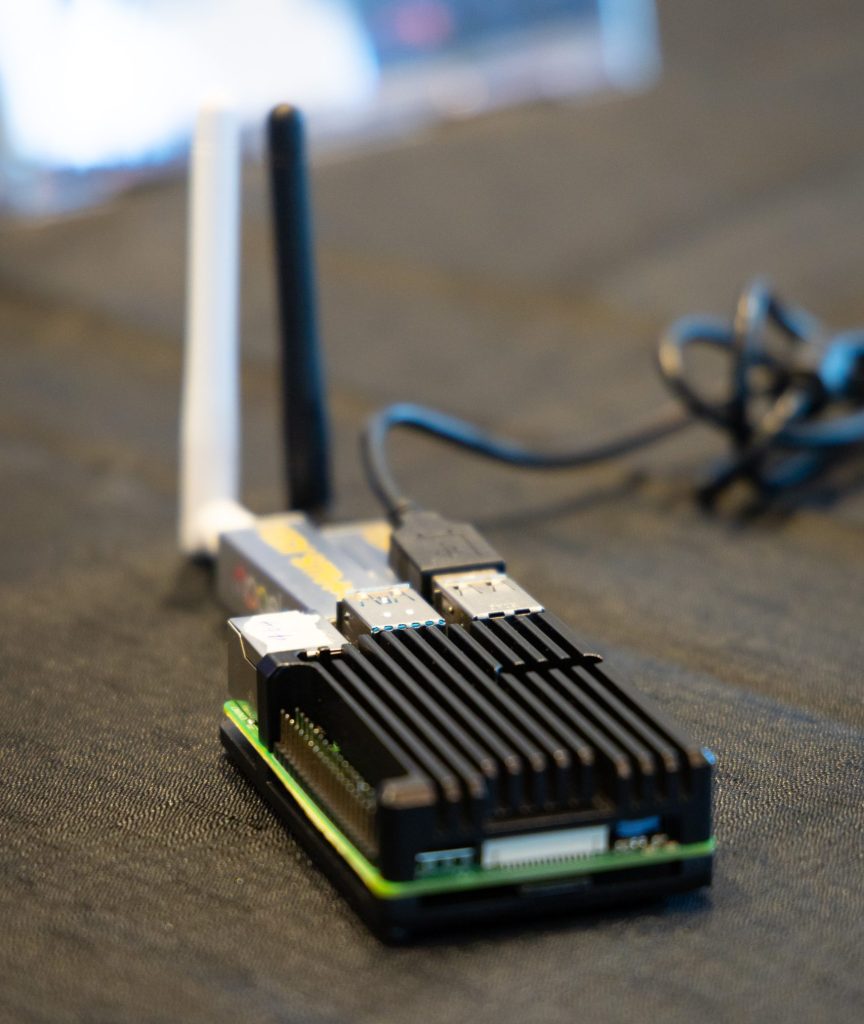
At the final presentation, Dr Wu demonstrated a fully standalone, field-deployable sensing unit, comprising:

  • Integrated hardware combining a controller, mobile-signal receiver, communications interface and power system
  • Custom firmware enabling real-time signal capture, onboard feature extraction and minute-level updates
  • Monitoring of signals from more than ten mobile cells simultaneously
  • Automated data transmission for remote monitoring and analysis

The system has been designed for minimal installation and long-term operation, making it suitable for deployment in locations where conventional rainfall infrastructure is limited.

Project 3 addressed a practical challenge raised during early program discussions: how rainfall can measure rainfall reliably in environments where traditional gauges are sparse, vulnerable, or difficult to maintain.

Rather than relying on mechanical instruments, the wireless rain gauge estimates rainfall intensity by analysing how rain affects mobile communication signals. Variations in signal strength across multiple frequency bands are processed to infer rainfall in near real time.

At the final presentation, Dr Wu demonstrated a fully standalone, field-deployable sensing unit, comprising:

  • Integrated hardware combining a controller, mobile-signal receiver, communications interface and power system
  • Custom firmware enabling real-time signal capture, onboard feature extraction and minute-level updates
  • Monitoring of signals from more than ten mobile cells simultaneously
  • Automated data transmission for remote monitoring and analysis

The system has been designed for minimal installation and long-term operation, making it suitable for deployment in locations where conventional rainfall infrastructure is limited.

Field experiments and performance

Results presented at the event were drawn from extended field experiments conducted across three contrasting environments:

  • Dense urban settings at the UTS campus, characterised by high-rise buildings and rich mobile coverage
  • Medium-density urban environments in Zetland, with mixed building layouts and directional coverage
  • Open suburban areas in Homebush, with fewer towers and sparser coverage

Across these sites, the system collected more than 30 days of continuous weather and signal data, operating reliably in all environments. Key performance outcomes shared at the presentation included:

  • Successful detection of real rainfall events across multiple sites
  • Rainfall estimates are produced within approximately two minutes, faster than many commercial gauges
  • Stable behaviour in both light and heavy rainfall conditions
  • Around 70 to 85 per cent of estimates falling within 1 to 2 mm/h of benchmark observations

These results demonstrate the potential for mobile-signal-based sensing to complement existing rainfall monitoring networks.

From final presentation to future trials

The final presentation marked a significant milestone for Project 3, concluding the R&D phase with a validated physical prototype and demonstrating early performance.

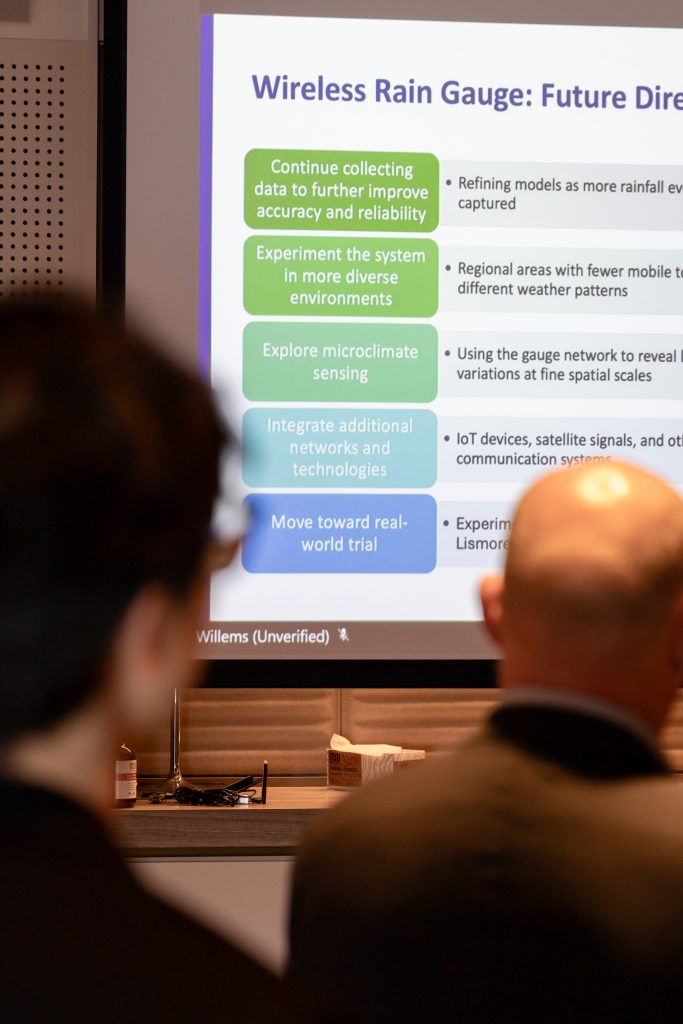
Looking ahead, the research team outlined next steps, including continued data collection to refine models, testing in additional environments with fewer mobile towers, and exploration of fine-scale microclimate sensing using distributed gauge networks. Plans also include integrating additional technologies, such as IoT devices and satellite signals, and progressing towards real-world trials in flood-prone communities and emergency-response settings.

The project forms part of CIN’s broader Sensing for Disasters Solutions initiative, delivered in partnership with NSSN. Read more about the other projects in the program below via the buttons on your right.

Project 1: Integrated Sensing and Communication Technology for Disaster Monitoring

Project 2: Advanced AI-Enhanced Geospatial Sensing for Disaster Management 

Project 3: A Novel Real-Time and Accurate Wireless Rain Gauge