From local flood challenges to practical innovation: Wireless Rain Gauge returns to Lismore
Three years after the Connectivity Innovation Network (CIN) brought researchers, government, industry and the Northern Rivers community together to explore how technology could strengthen disaster resilience, we returned to Lismore to share one of the innovations that grew directly from those conversations.
Hosted at Southern Cross University, the Wireless Rain Gauge Presentation and Demonstration brought together researchers, emergency management professionals, local government, industry and community representatives to hear from Dr Kai Wu of the University of Technology Sydney and learn about a new approach to rainfall monitoring.
For the CIN, it was a particularly meaningful event: it marked an important milestone in the journey from identifying a local challenge to developing a practical research solution with the potential to support communities vulnerable to flooding.
Returning to Lismore
Opening the event, Southern Cross University Pro Vice-Chancellor (Research and Education Impact) Ben Roche reflected on the significance of bringing the project back to Lismore.
Following the devastating floods of 2022, CIN held its first Regional Connectivity Symposium in the Northern Rivers, creating a forum where local communities, researchers, government and industry could openly discuss the challenges exposed by the disaster and explore how technology might help strengthen resilience in the future.
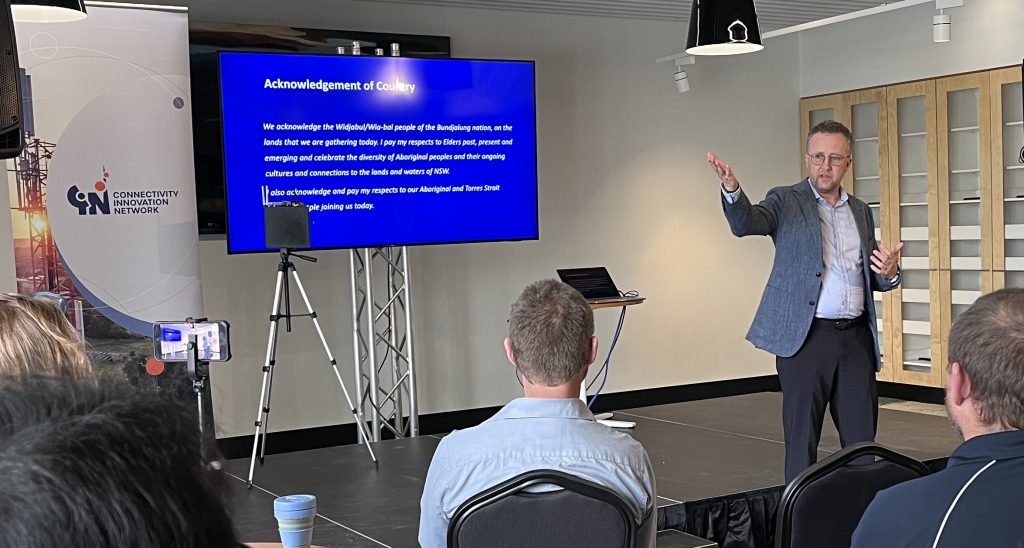
Ben Roche, Pro Vice-Chancellor, welcoming attendees to the Wireless Rain Gauge Presentation and Demonstration.
Those discussions highlighted the need for better sensing and communication technologies and helped shape CIN’s Sensing for Disasters initiative, delivered in collaboration with the NSW Smart Sensing Network (NSSN).
PVC Roche described the event as an opportunity to “close the loop” by returning to the community with one of the innovations that had emerged from those early conversations. He also recognised the ongoing collaboration between Southern Cross University, the University of Technology Sydney and the Connectivity Innovation Network in supporting research that responds to real challenges faced by regional communities.
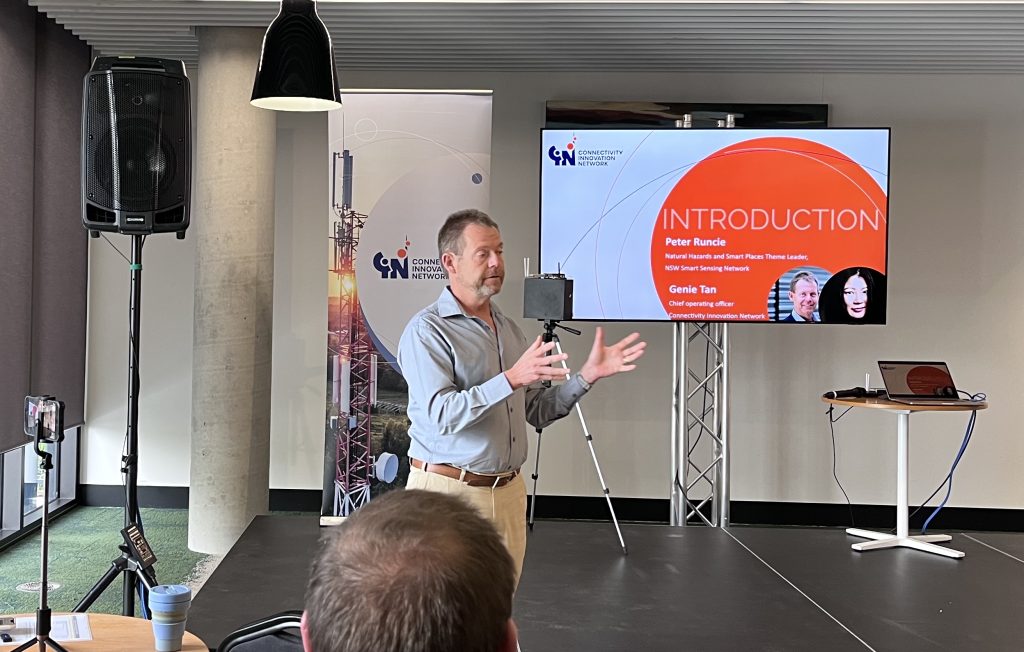
Peter Runcie, Natural Hazards and Smart Places Theme Leader at the NSW Smart Sensing Network (NSSN), opening the event and reflecting on the importance of collaborative research to strengthen disaster resilience.
A different way to measure rainfall
Dr Wu also shared results from field trials conducted across three locations in Greater Sydney, representing dense urban, suburban and mixed-density environments.
Over more than 30 days of continuous monitoring, the team collected mobile signal data alongside benchmark rainfall measurements to develop and validate the Wireless Rain Gauge’s sensing models.
Early trial results are encouraging.
The prototype performed particularly well during moderate and heavy rainfall events, with rainfall estimates closely matching benchmark measurements. On average, the system generated rainfall estimates within around two minutes, providing more frequent updates than many conventional rainfall monitoring approaches.
Dr Wu also explained that further work is needed to improve performance during lighter rainfall events. Every rainfall event captured helps refine the machine-learning models and improve the system’s accuracy over time.
Encouraging early results
Dr Wu also shared results from field trials conducted across three locations in Greater Sydney, representing dense urban, suburban and mixed-density environments.
Over more than 30 days of continuous monitoring, the team collected mobile signal data alongside benchmark rainfall measurements to develop and validate the Wireless Rain Gauge’s sensing models.
Early trial results are encouraging.
The prototype performed particularly well during moderate and heavy rainfall events, with rainfall estimates closely matching benchmark measurements. On average, the system generated rainfall estimates within around two minutes, providing more frequent updates than many conventional rainfall monitoring approaches.
Dr Wu also explained that further work is needed to improve performance during lighter rainfall events. Every rainfall event captured helps refine the machine-learning models and improve the system’s accuracy over time.
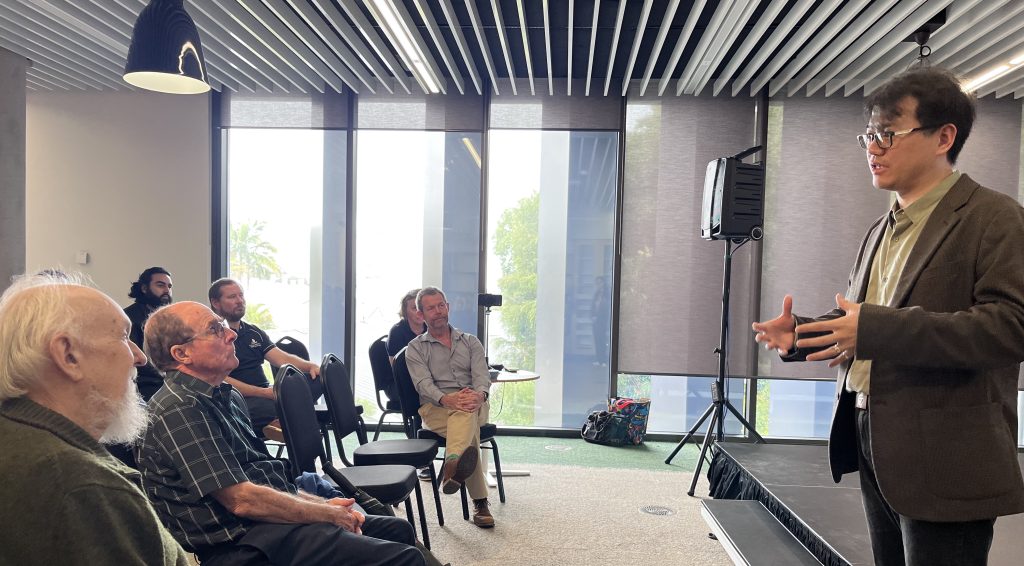
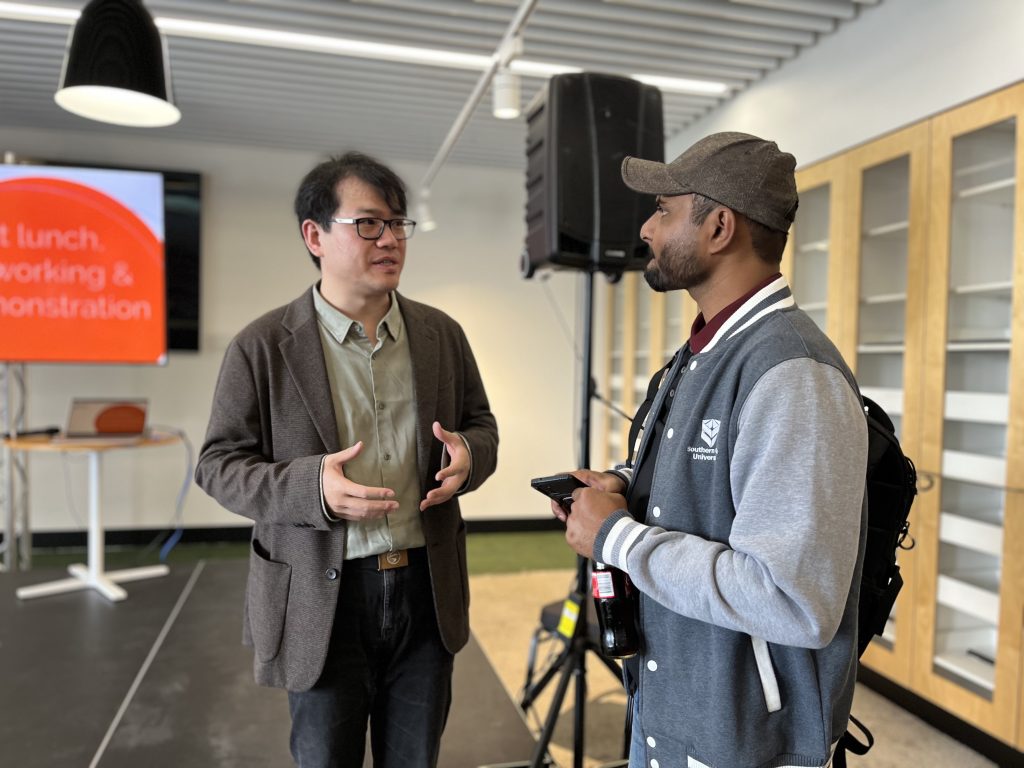
Dr Kai Wu shares the research behind the Wireless Rain Gauge with attendees in Lismore.
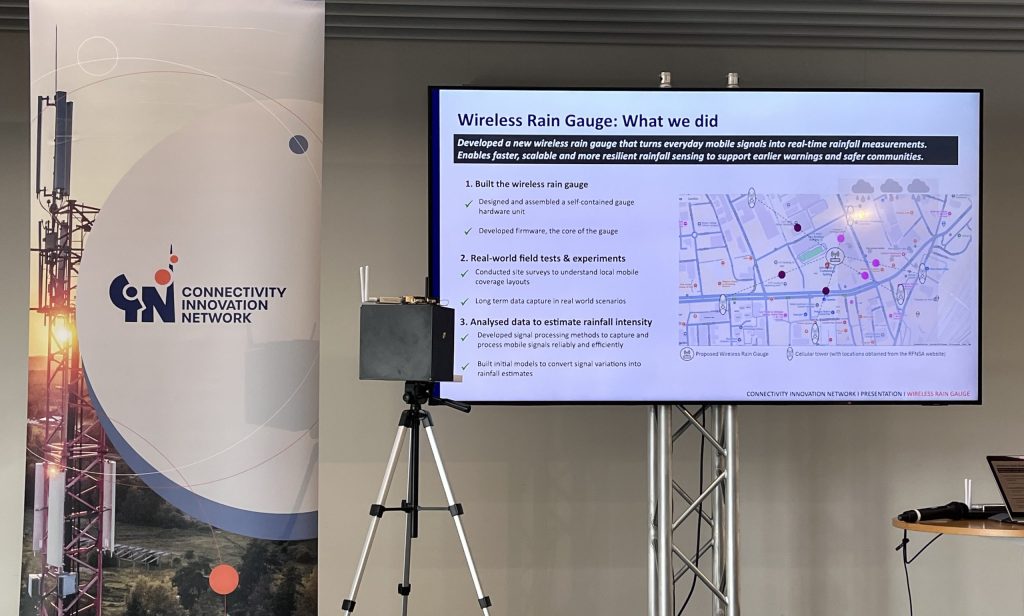
The Wireless Rain Gauge prototype uses existing mobile (cellular) communication signals to estimate rainfall in real time.
The next stage
While the results are promising, the Wireless Rain Gauge remains an active research project.
The next phase will focus on expanding testing into more diverse environments, particularly regional communities where terrain, vegetation, weather patterns and mobile coverage differ from metropolitan areas.
Flood-prone regions such as the Northern Rivers will provide valuable opportunities to further validate the technology under real-world conditions.
Dr Wu also outlined longer-term opportunities to combine cellular signals with other wireless technologies, including satellite communications and Internet of Things (IoT) networks, creating an even more resilient sensing platform for environmental monitoring across a wide range of locations.
The goal is not to replace conventional rain gauges, but to complement them by filling gaps in existing monitoring networks and providing richer, more localised rainfall information where it is needed most.
An engaged discussion
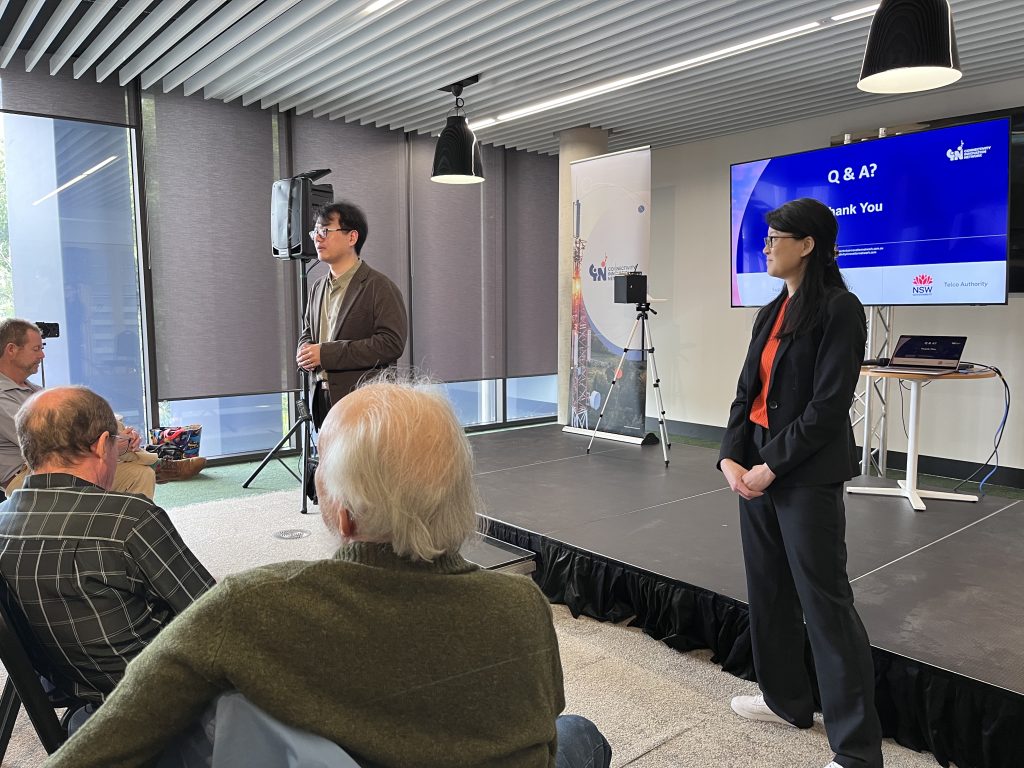
The presentation concluded with an engaging question-and-answer session that highlighted the strong interest in the technology and its potential applications.
Attendees explored how the Wireless Rain Gauge would perform during mobile network outages, prolonged rainfall events and major flood emergencies. Others asked about commercialisation, validation against Bureau of Meteorology rainfall stations and opportunities for future regional trials.
Dr Wu explained that the system passively receives broadcast signals from multiple nearby mobile towers rather than connecting to the mobile network itself. This provides a degree of redundancy should individual towers become unavailable, although widespread infrastructure outages remain an important area for future research.
Several attendees also highlighted the value of trialling the technology across Northern Rivers catchments over longer periods to strengthen the data and demonstrate performance under local conditions.
The discussion reflected exactly what collaborative research should look like: researchers sharing new ideas, practitioners testing them against operational realities, and both learning from each other’s experience.
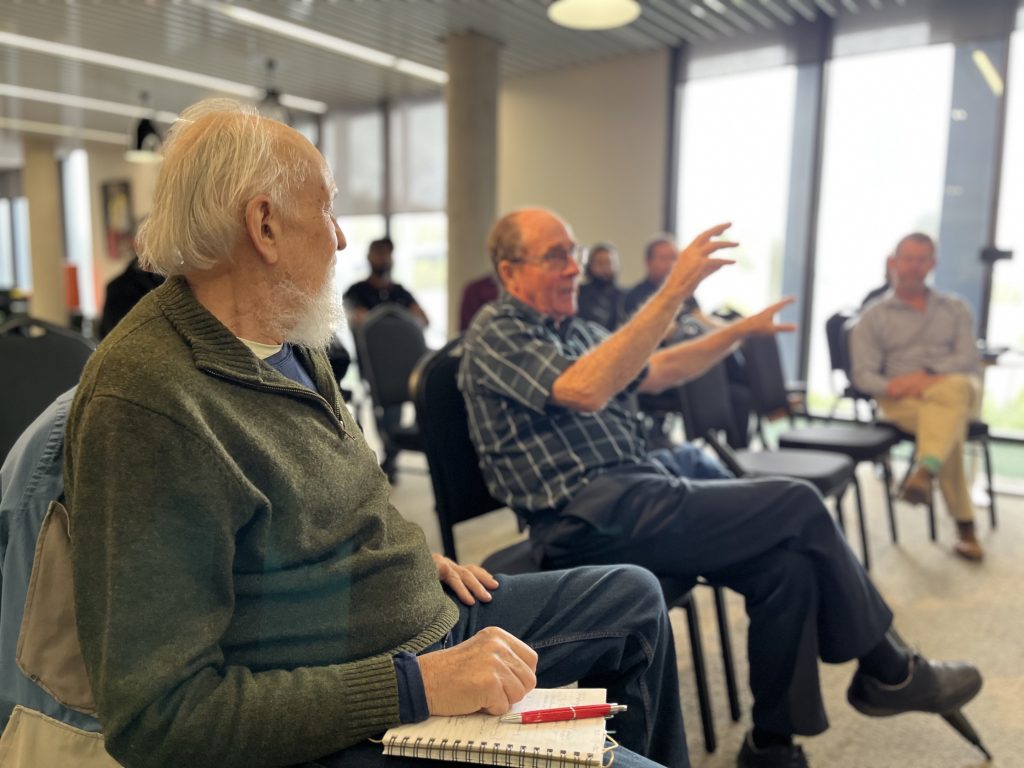
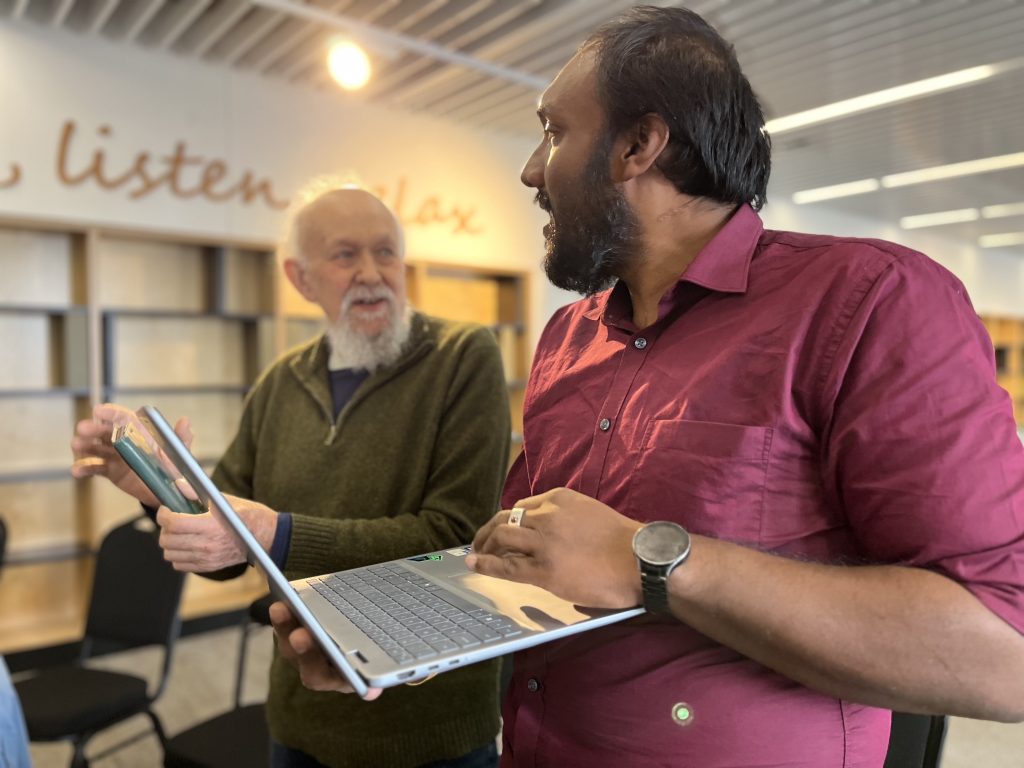
The question-and-answer session sparked valuable discussion between researchers, government, industry and community representatives on the future of wireless rainfall monitoring.
Looking ahead
Closing the event, CIN Chief Operating Officer Genie Tan thanked attendees for their thoughtful questions and ongoing support.
She reaffirmed CIN’s commitment to working closely with communities to identify real challenges and support research with clear pathways towards real-world adoption.
Returning to Lismore felt like completing a circle.
The conversations that began here after the 2022 floods have already led to new partnerships, new research and emerging technologies. The Wireless Rain Gauge is one example of what can happen when communities, researchers, industry and government work together to solve real-world challenges.
As the project continues to evolve, CIN looks forward to supporting further collaboration across New South Wales to strengthen the technology and explore how innovative sensing approaches can contribute to safer, more connected and more resilient communities.
CIN Chief Operating Officer Genie Tan closed the event by thanking attendees and reaffirming CIN’s commitment to collaborative research that addresses real-world challenges. The event concluded with a light lunch, providing attendees with the opportunity to network and continue discussions with the research team and fellow participants.
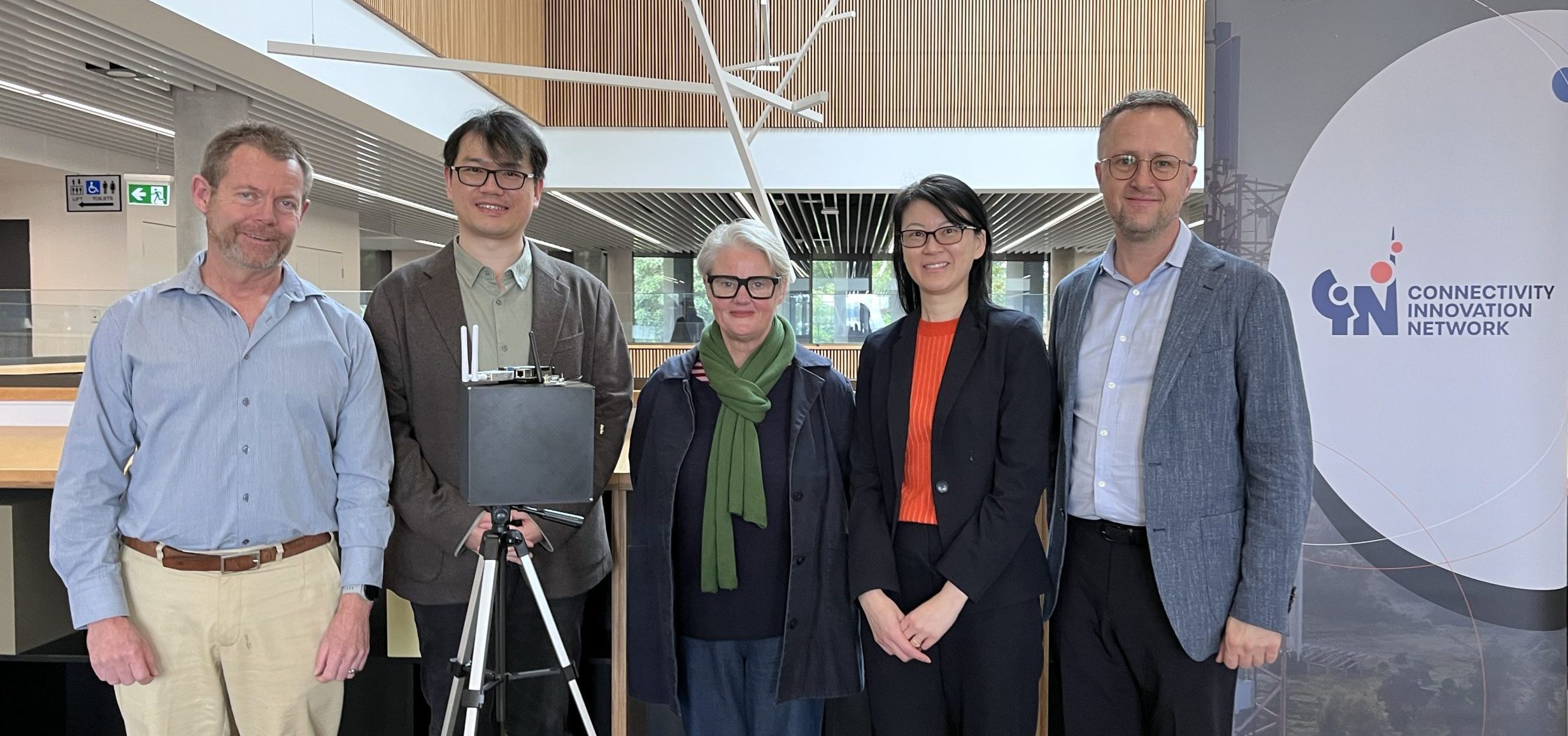
From left to right: Peter Runcie (NSSN), Dr Kai Wu (UTS), Professor Mary Spongberg, Genie Tan (CIN) and Ben Roche (SCU).
Event programme
11:30 am
Welcome and introduction from Southern Cross University
Ben Roche, Pro Vice-Chancellor SCU
11:35 am
Introduction from the Connectivity Innovation Network & NSW Smart Sensing Network
Peter Runcie, Natural Hazards & Smart Places Theme Leader NSSN
11:40 am
Wireless Rain Gauge presentation and demonstration